
 Business
Why Everyone Is Talking About Apple’s New AI Features Coming to Pro Devices Globally

 March 24, 2026
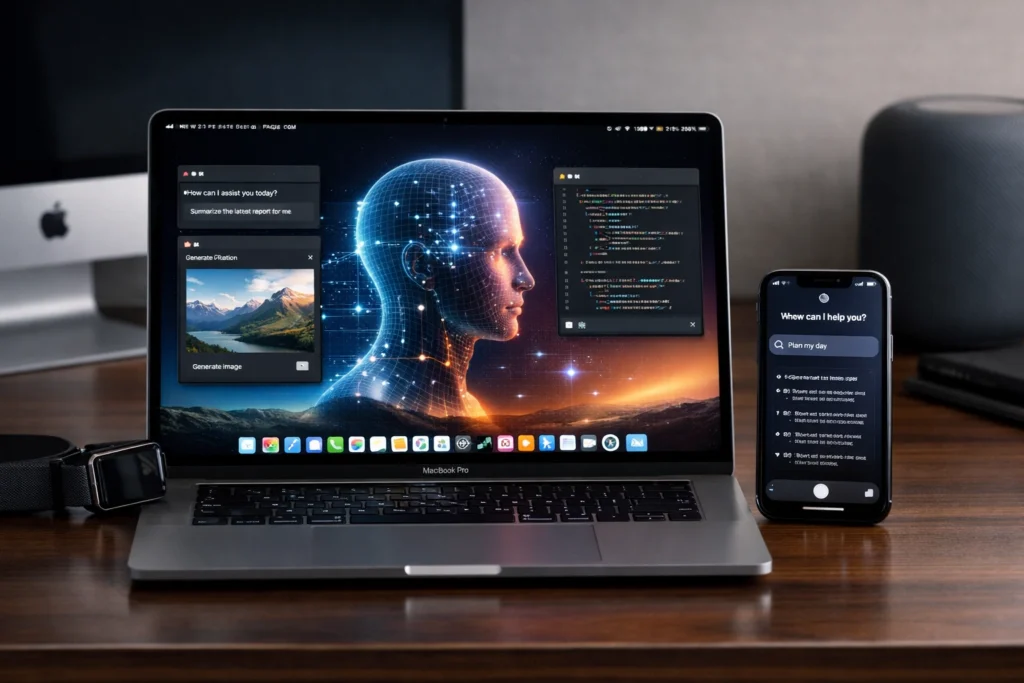
The tech world is currently buzzing with one name: Apple. While artificial intelligence has been the industry's favorite buzzword for years, the spring 2026 rollout of Apple’s latest AI suite is different. It isn't just a collection of gimmicks; it is a fundamental shift in how we interact with our devices. As these features land on Pro devices globally this week, the conversation has shifted from "what can AI do?" to "how did we ever live without this?"
From the streets of Tokyo to the tech hubs in San Francisco, users are getting their first real taste of a Siri that actually understands them and a camera that sees the world with human-like context. This rollout represents a massive leap for the Cupertino giant, blending on-device power with a new standard for digital privacy.
The Siri Transformation: From Assistant to Companion
For a long time, Siri was the butt of many jokes in the tech community. It was reliable for setting timers or checking the weather, but it often stumbled when faced with complex, multi-step requests. That era is officially over. The Siri overhaul arriving this spring is a complete ground-up reconstruction.
The new Siri is conversational in a way that feels eerily natural. It no longer requires you to restart your sentence if you stumble over your words. More importantly, it possesses "on-screen awareness." This means if you are looking at a photo a friend sent you in Messages, you can simply say, "Enhance this and send it to my 'Work' folder," and Siri knows exactly which photo and which folder you are talking about.
For professionals, the multi-app execution is the real game-changer. Imagine taking a series of raw photos edited in Lightroom, asking Siri to create a shared album for a specific group of people, and then drafting a summary email to your team: all with a single voice command. This level of cross-app fluidity is what separates Apple’s ecosystem from its competitors. It’s no longer about opening five different apps; it’s about the intent.

Privacy First: The Private Cloud Compute Standard
One of the biggest hurdles for AI adoption has been the "creepiness factor." Most AI models require your data to be sent to a massive server farm where it is processed and sometimes stored. Apple has taken a drastically different path with its "Private Cloud Compute" architecture.
In this new setup, roughly 80% of all AI requests are handled directly on the device. Your data never leaves your iPhone or Mac. For tasks that require more heavy lifting, the system uses Apple’s own silicon-powered servers. The revolutionary part? This data is cryptographically inaccessible to Apple itself. Even if a government agency or a hacker tried to peek at the processing, the data is essentially invisible.
This approach ensures that your personal information, from your medical records to your private messages, remains yours. By using the A19 and M5 chips, Apple has managed to maintain incredible speed without sacrificing the security that has become their hallmark. This is a significant point of interest for anyone following the digital journey of modern tech leaders who prioritize user trust.
Visual Intelligence: The Camera as a Search Engine
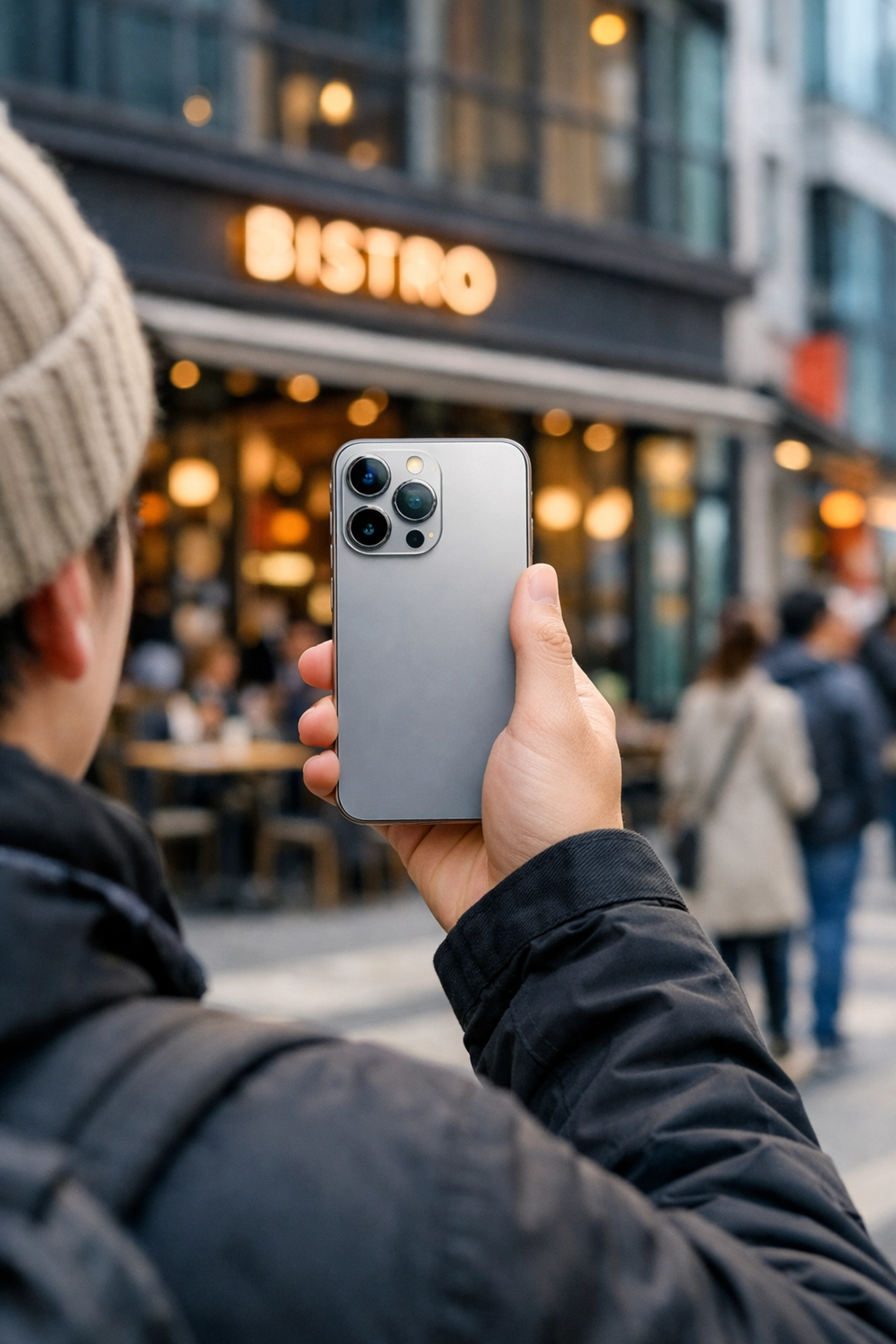
We’ve seen visual search before, but Apple’s integration of Visual Intelligence feels like it was designed by someone who actually uses a phone in the real world. By simply pointing the camera at a restaurant storefront, you don't just get a name; you see the latest reviews, popular dishes, and even a live look at how busy it is.
The contextual capabilities go even deeper. If you point your iPhone at a concert poster, the device can automatically create a calendar event for the show, find the artist’s latest single on Apple Music, and even suggest a ride-share app to get you to the venue. It turns the camera from a tool for capturing memories into a tool for navigating reality.
This feature directly competes with Google Lens, but the advantage here is the deep OS integration. It doesn't feel like an "extra" feature you have to remember to open; it feels like a native part of the experience that anticipates what you need before you even ask.

The Power Within: A19 and M5 Chips
None of these features would be possible without the raw horsepower of the latest silicon. The A19 chip in the iPhone 17 Pro and the M5 chip across the Mac and iPad Pro lines are the unsung heroes of this AI revolution.
These chips are designed with massive Neural Engines specifically optimized for the large language models (LLMs) that power Apple Intelligence. This is why many of the most advanced features are limited to Pro devices. While entry-level users still get a taste of the AI future, the Pro devices are the only ones capable of the sub-millisecond latency required for on-screen awareness and real-time visual processing.
For businesses, this hardware jump is crucial. As we look at how internet marketing can help you in customer acquisition, having a device that can instantly summarize trends or generate marketing copy on the fly is a massive competitive advantage.
Why It Matters
The global release of these AI features is more than just a software update; it is a stake in the ground. Here is why it matters for the average user and the industry at large:
- Democratization of Complex Tech: Apple has a history of taking complicated technology and making it "feel native." This rollout makes high-level AI accessible to people who don't care about "parameters" or "token windows": they just want their phone to work better.
- A New Privacy Benchmark: By proving that AI can be powerful without being intrusive, Apple is forcing the rest of the industry to rethink their data collection policies.
- Hardware Relevancy: In an era where many felt smartphone innovation had plateaued, these AI features give users a compelling reason to upgrade to Pro-level hardware.
- Ecosystem Lock-in: The more these features integrate across your iPhone, iPad, and Mac, the harder it becomes to leave the ecosystem. The seamless handoff of AI tasks between devices is a feature no other manufacturer has perfected yet.
Industry Collaboration: The ChatGPT and Gemini Factor
In a surprising move for a company known for its "walled garden," Apple has integrated third-party models like ChatGPT and Google’s Gemini into the experience. If Siri realizes a request is better suited for a specialized external model: like writing a complex 2,000-word essay or generating a highly specific coding block: it asks the user for permission to share the prompt with ChatGPT.
This hybrid approach allows Apple to provide the best of both worlds: their own ultra-private, locally-run models for daily tasks, and the world’s most powerful cloud-based models for specialized queries. It’s a pragmatic strategy that acknowledges that no single company can win the AI race alone.

The Global Rollout and Localized AI
While English-speaking markets are the first to get the full suite, the global rollout includes significant updates for dozens of languages. Apple’s AI models are being localized to understand regional slang, cultural context, and local services. This ensures that a user in Mumbai gets a similarly rich experience as a user in London.
The focus on entry-level iPads and older Pro models (like the iPhone 15 Pro) also shows that Apple isn't completely leaving their existing user base behind. While they want you to buy the latest A19-powered device, they are making sure the "native" AI feel extends as far back as the hardware allows.
Looking Ahead
As we move through 2026, the impact of this rollout will become even clearer. We are moving toward a future where our devices don't just wait for our input but actively assist us in navigating our lives. Whether it's managing a busy schedule, editing professional-grade media, or just finding a good place for lunch, Apple's new AI features are setting the tempo for the next decade of personal computing.
The conversation isn't just about what Apple did; it's about what everyone else will have to do to keep up. For now, the Pro devices are the gold standard, and the world is watching to see how this new era of intelligent interaction unfolds.

Recent Posts
- The Ultimate Guide to Central Bank Digital Currencies: Everything You Need to Succeed Globally
- Global stock markets rally following positive employment data and cooling inflation figures in April
- London Tokyo Paris and New York Reveal Shared Global Entertainment Industry Growth Strategies
- Daily Global News Updates: Entertainment, Tech, Crypto, and More
- Apple Intelligence Sets New Global Privacy Standards for Artificial Intelligence Software Rollouts
- Top 10 Latest World News Headlines Affecting International Trade And Global Business Markets Today
- Major streaming services launch AI search tools and 4K sports to enhance viewer engagement
- Global travel restrictions tighten as nations update entry requirements for international passengers in 2026
- Daily Global News Updates: Entertainment, Tech, Crypto, and More
- Entertainment News Today: The Ultimate Guide to Everything You Need to Know About Cinema