
 Business
Why Everyone Is Talking About OpenAI Sora Video Release And You Should Too

 March 26, 2026
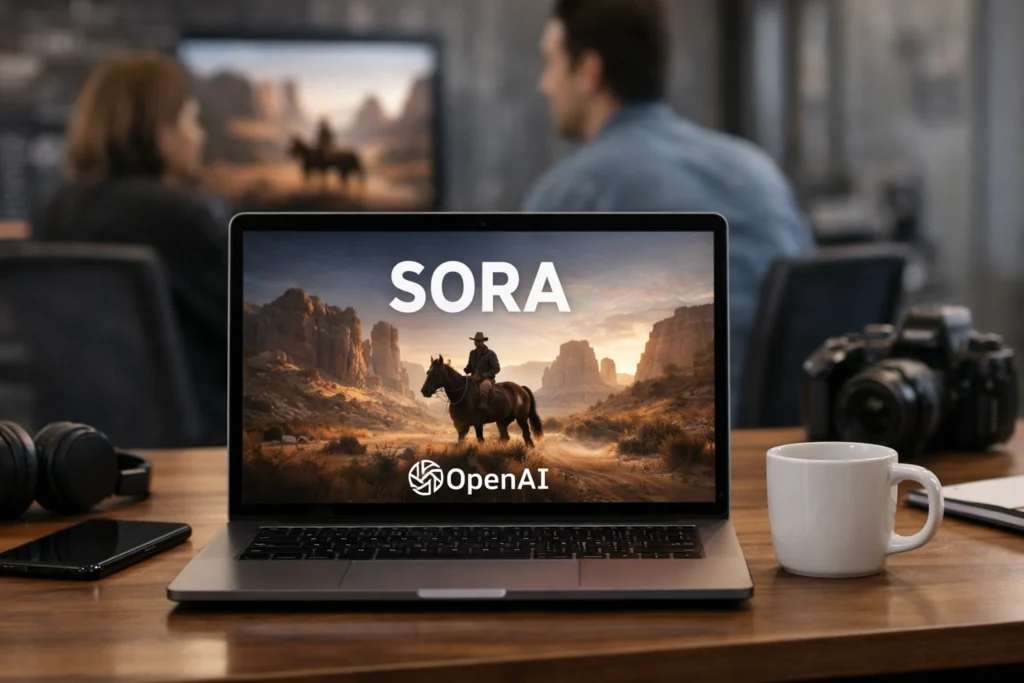
The world of artificial intelligence moves at a speed that often leaves even the most tech-savvy creators breathless. Just a few months ago, the conversation was dominated by the incredible potential of OpenAI’s Sora, a tool that promised to turn simple text prompts into cinematic video masterpieces. However, as of March 2026, the conversation has taken a dramatic and unexpected turn. If you have been following the trajectory of generative AI, you know that the "release" everyone is talking about today isn't a feature update, it is the announcement that OpenAI is officially discontinuing the Sora video application.
This move has sent shockwaves through the marketing, entertainment, and tech industries. At Clout News, we have been tracking the integration of AI in digital strategies closely, and the rise and fall of Sora offers a masterclass in the volatility of the current tech landscape. Understanding why this is happening is crucial for anyone involved in digital storytelling or brand management.
The Meteoric Rise and the Sudden Stall
When Sora first hit the public consciousness in late 2025, it felt like the final frontier of content creation had been conquered. The app launched in September 2025 and achieved a milestone that many thought impossible: it reached one million downloads faster than ChatGPT did during its initial release. For a brief moment, it was the top-rated app on Apple’s App Store, and creators were using it to produce everything from hyper-realistic nature documentaries to surrealist marketing campaigns.
However, the honeymoon period was short-lived. By January 2026, data showed a 45% decline in active downloads and user retention. While the technology was undoubtedly impressive, the novelty began to wear off as users encountered the steep learning curve of prompt engineering and the high costs associated with high-resolution generation. The "Sora release" we are discussing now is essentially a strategic retreat by OpenAI, as they pivot away from consumer-facing video apps toward more foundational infrastructure.

The $1 Billion Disney Divorce
One of the most significant casualties of the Sora shutdown is the high-profile partnership between OpenAI and Disney. In late 2025, the two giants announced a groundbreaking deal that allowed OpenAI to train Sora on Disney’s vast library of characters and intellectual property. The plan was to allow creators to generate authorized AI content featuring iconic characters, backed by a staggering $1 billion investment from the House of Mouse.
With the discontinuation of the Sora app and API, this deal has effectively dissolved. While Disney has stated they will continue to explore AI partnerships, the end of this specific collaboration marks a turning point. It highlights the growing tension between creative rights and generative technology. For marketers, this is a signal that the "Wild West" era of AI video might be closing in favor of more regulated, enterprise-focused solutions. If you are tracking how these shifts affect the broader market, you might want to look at our latest world news updates to see how other industries are reacting to AI volatility.
Why It Matters: The Compute Scarcity Crisis
You might be wondering why a company as successful as OpenAI would kill its most "viral" product. The answer lies in something far less glamorous than art: processing power. The computational demands required to generate high-definition video at scale are astronomical. As competition heats up with rivals like Anthropic and Google, OpenAI is facing a scarcity of the processing capacity needed to keep all its plates spinning.
By shutting down the consumer-facing Sora platform, OpenAI is reallocating those precious GPU resources toward "world simulation research." The goal is no longer just making pretty videos for social media; it is about teaching AI to understand physical laws and spatial reasoning to enhance robotics. This shift suggests that the future of AI isn't just in our screens, but in the physical world.

A Strategic Pivot to Chips and Enterprise
Under the leadership of Sam Altman, OpenAI is undergoing a significant restructuring. Altman has moved away from direct safety and security oversight, handing those reins to other executives, to focus almost exclusively on fundraising and securing hardware. The company is narrowing its focus toward capital investments and the development of proprietary AI chips.
This is a clear signal to the business world: the era of "free-for-all" AI experimentation is being replaced by a focus on enterprise solutions and industrial applications. For a marketing agency like Clout News, this means we must look beyond the apps and toward the underlying models that will power the next generation of business tools. The pivot to enterprise-grade AI is a trend we predicted in our analysis of 2026 social media marketing trends, and the Sora news confirms that the industry is maturing rapidly.
The Impact on Content Creators and Marketers
If you were one of the many creators who spent months mastering Sora, this news might feel like a setback. However, the technology itself isn't disappearing; it is evolving. The research team behind Sora is being folded into other departments, and the lessons learned from video generation are being applied to more robust models.
For marketers, this means a shift in strategy is necessary:
- Diversify Your Toolkit: Don't rely on a single AI platform. With the sudden shutdown of Sora, those who used a multi-platform approach (utilizing tools from Google or niche AI video startups) are in a much better position.
- Focus on Strategy Over Tools: The "how" of AI is changing daily, but the "why" remains the same. Content that resonates still requires human insight and strategic planning.
- Watch the Robotics Space: As OpenAI moves Sora’s tech into robotics, we may soon see AI-driven physical marketing experiences that were previously the stuff of science fiction.
Competition in the AI Video Space
OpenAI's exit from the consumer video app space creates a massive vacuum. Companies like Anthropic, which have focused more on text and code, are rumored to be eyeing the video market with more efficient, lower-cost models. Meanwhile, Google continues to integrate its "Veo" video technology directly into its search and YouTube ecosystems.
The battle for AI dominance is no longer about who can make the most impressive demo; it is about who can provide a sustainable, cost-effective service that businesses can actually afford to use long-term. OpenAI’s decision to pull back might actually be a savvy move to avoid a "burn rate" that could jeopardize their primary mission of achieving AGI (Artificial General Intelligence).

What Happens to Sora.com?
According to internal reports, Sora.com and the associated APIs will be phased out over the coming months. While a specific final date hasn't been set, the message is clear: the platform as we know it is ending. The underlying research will continue to live on in "world simulation," which OpenAI believes is the key to creating AI that can interact with the real world in a meaningful way.
This research-first approach might be less exciting for the average TikTok creator, but it is far more significant for the future of technology. By simulating the world, OpenAI is essentially building a "digital twin" of reality where AI can learn without the risks of the physical world.

Final Thoughts: Should You Still Care About Sora?
Yes, you should care: not because of the app itself, but because of what its lifecycle tells us about the future. The "Sora release" cycle of 2025-2026 proves that even the most hyped technology can fail if the infrastructure and business model aren't sustainable. It serves as a reminder to businesses to stay agile and not get too attached to a single piece of software.
At Clout News, we believe the next phase of AI will be even more transformative, even if it’s less about "apps" and more about integrated intelligence. For more updates on how the tech landscape is shifting, you can explore our category sitemap for the latest in tech and business news.
The Sora story isn't over; it's just moving from the film studio to the robotics lab. Stay tuned, because if the last year has taught us anything, it’s that the next big thing is usually just around the corner.

Recent Posts
- Global stock markets rally following positive employment data and cooling inflation figures in April
- London Tokyo Paris and New York Reveal Shared Global Entertainment Industry Growth Strategies
- Daily Global News Updates: Entertainment, Tech, Crypto, and More
- Apple Intelligence Sets New Global Privacy Standards for Artificial Intelligence Software Rollouts
- Top 10 Latest World News Headlines Affecting International Trade And Global Business Markets Today
- Major streaming services launch AI search tools and 4K sports to enhance viewer engagement
- Global travel restrictions tighten as nations update entry requirements for international passengers in 2026
- Daily Global News Updates: Entertainment, Tech, Crypto, and More
- Entertainment News Today: The Ultimate Guide to Everything You Need to Know About Cinema
- Apple Releases Critical Security Patch For Global iPhone Users Explained In Under Three Minutes