
 Business
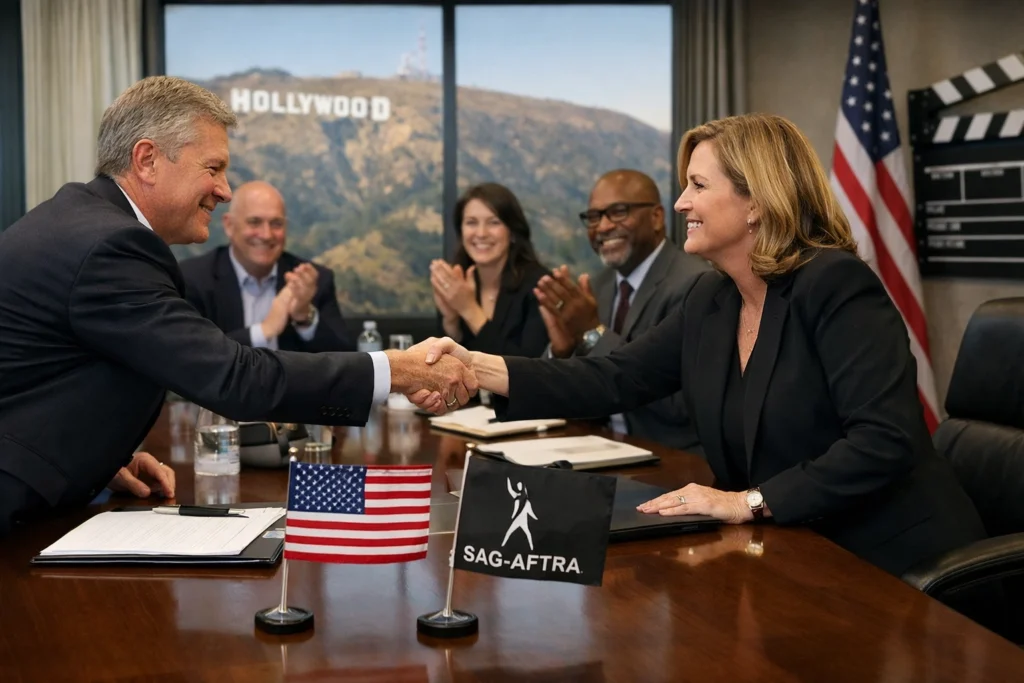
Major Film Studios Reach Tentative Agreement With Actors Union to End Two Month Strike

 March 24, 2026
Hollywood is finally getting ready to call "action" again. After sixty days of empty soundstages and quiet backlots, the major film and television studios have reached a tentative agreement with the actors union to end the strike that has paralyzed the industry since early 2026.
The deal, struck in the early hours of Tuesday morning, comes after a grueling series of marathon negotiating sessions. While the full text of the agreement hasn’t been released to the public yet, sources close to the negotiations suggest that both sides made significant concessions to ensure the cameras start rolling before the summer blockbuster season is completely lost.
For fans of big-budget cinema and binge-worthy streaming series, this is the news everyone has been waiting for. The strike, which began in late January, saw thousands of actors swap their scripts for picket signs, demanding better protection against artificial intelligence and a fairer share of streaming revenue. Now, it looks like a compromise has been found that could redefine the entertainment landscape for the next decade.
The Breakthrough in the Boardroom
The negotiations between the Screen Actors Guild-American Federation of Television and Radio Artists (SAG-AFTRA) and the Alliance of Motion Picture and Television Producers (AMPTP) had been deadlocked for weeks. The primary sticking point was, unsurprisingly, the role of generative AI in film production.
Actors were rightfully concerned that their digital likenesses could be used indefinitely without their consent or additional compensation. The studios, on the other hand, argued for the flexibility to use emerging technologies to lower production costs. According to insiders, the new deal includes "groundbreaking" language that requires studios to obtain specific, informed consent before using an actor’s digital twin, alongside a guaranteed pay structure for such usage.
This agreement doesn't just benefit the A-list stars. It provides a safety net for background actors and day players who were most at risk of being replaced by digital crowds. By securing these protections, the union has signaled that while they aren't anti-tech, they are pro-humanity.
Streaming Residuals and the New Math
Beyond the AI debate, the strike was fueled by the shift from traditional cable to streaming. In the old days, a hit show on a major network meant a lifetime of residual checks for the cast. In the era of Netflix and Disney+, those checks have often dwindled to pennies.
The tentative agreement reportedly includes a new "success-based" residual model. Under this system, actors will receive bonus payments when a show or movie hits certain viewership milestones on a platform. This was a major win for the union, as it forces studios to be more transparent with their data: something they have historically guarded like the crown jewels.
For the actors, this isn't just about the money; it's about being recognized as partners in the success of a platform. When a show goes viral and brings in millions of new subscribers, the people on screen want to know that their contribution is being valued appropriately. You can read more about the stars behind these hits on our Celebs Got Clout page.
The Cost of Two Months of Silence
While the deal is a cause for celebration, the two-month shutdown has left a mark on the industry. Production schedules have been tossed into chaos, and several highly anticipated films originally slated for late 2026 have already been pushed back to 2027.
The economic impact wasn't just felt by the actors. Thousands of crew members: from lighting technicians and makeup artists to caterers and transport drivers: were out of work during the standoff. Small businesses in Los Angeles and other filming hubs like Atlanta and London reported a significant drop in revenue as the industry ground to a halt.
Industry analysts estimate that the strike cost the California economy alone over $1.5 billion in lost wages and production spending. The urgency to reach a deal became undeniable as the losses began to mount and the threat of a prolonged summer strike loomed.
Why It Matters
This agreement is more than just a contract renewal; it is a blueprint for the future of work in the creative arts. As AI continues to evolve at a breakneck pace, the protections negotiated here will likely serve as a template for other industries facing similar technological disruptions.
For the average viewer, this means that the shows you love will finally return to production. The "content drought" that many feared for the upcoming fall season has likely been averted, though it will take a few weeks for sets to get back up to full speed.
More importantly, it reinforces the power of collective bargaining in an era of massive corporate consolidation. In a world where a handful of tech and media giants control almost everything we watch, the actors union proved that the "talent" still has a voice that cannot be ignored. This victory for the workers is a major headline in the Entertainment world and sets a precedent for labor movements globally.
The Human Element of the Strike
Throughout the sixty days, the picket lines were a sea of familiar faces and unknown names standing side-by-side. The strike brought a sense of unity to Hollywood that hadn't been seen in years. High-profile stars were seen delivering coffee and pizzas to background actors, while veteran performers shared stories of past struggles with newcomers.
This human connection was a stark contrast to the cold, data-driven negotiations taking place behind closed doors. The strike reminded everyone that behind the glamour and the red carpets, the entertainment industry is built on the hard work of people who are passionate about storytelling.
The "tentative" nature of the agreement means it still needs to be ratified by the union's membership. A vote is expected to take place over the next week. While there is always a chance of a late-stage hiccup, leadership on both sides seems confident that the rank-and-file will see this as a fair and necessary compromise.
Looking Toward the Future
As the industry prepares to restart, there is a palpable sense of relief in the air. Writers’ rooms are buzzing, agents are fielding calls, and costume departments are dusting off their sewing machines. The "Great Pause" of 2026 is ending, but the lessons learned will likely stick around.
The studios have learned that there is a limit to how far they can push their talent before the system breaks. The actors have learned that their greatest strength lies in their solidarity. And the audience has learned just how much they value the work that goes into creating the stories that define our culture.
The road ahead won't be entirely smooth. There is a massive backlog of projects to sort through, and the competition for studio space and crew availability will be fierce in the coming months. However, for now, the mood is optimistic. Hollywood has survived another crisis, and it has come out on the other side with a clearer vision of how to balance technology with tradition.
The "Year of Labor" 2026 will go down in history as the time when the humans in the machine stood up and demanded a seat at the table. As we wait for the final ratification, one thing is certain: the show must go on, and it’s about to get a whole lot more interesting.

Recent Posts
- The Ultimate Guide to Central Bank Digital Currencies: Everything You Need to Succeed Globally
- Global stock markets rally following positive employment data and cooling inflation figures in April
- London Tokyo Paris and New York Reveal Shared Global Entertainment Industry Growth Strategies
- Daily Global News Updates: Entertainment, Tech, Crypto, and More
- Apple Intelligence Sets New Global Privacy Standards for Artificial Intelligence Software Rollouts
- Top 10 Latest World News Headlines Affecting International Trade And Global Business Markets Today
- Major streaming services launch AI search tools and 4K sports to enhance viewer engagement
- Global travel restrictions tighten as nations update entry requirements for international passengers in 2026
- Daily Global News Updates: Entertainment, Tech, Crypto, and More
- Entertainment News Today: The Ultimate Guide to Everything You Need to Know About Cinema