
 Business
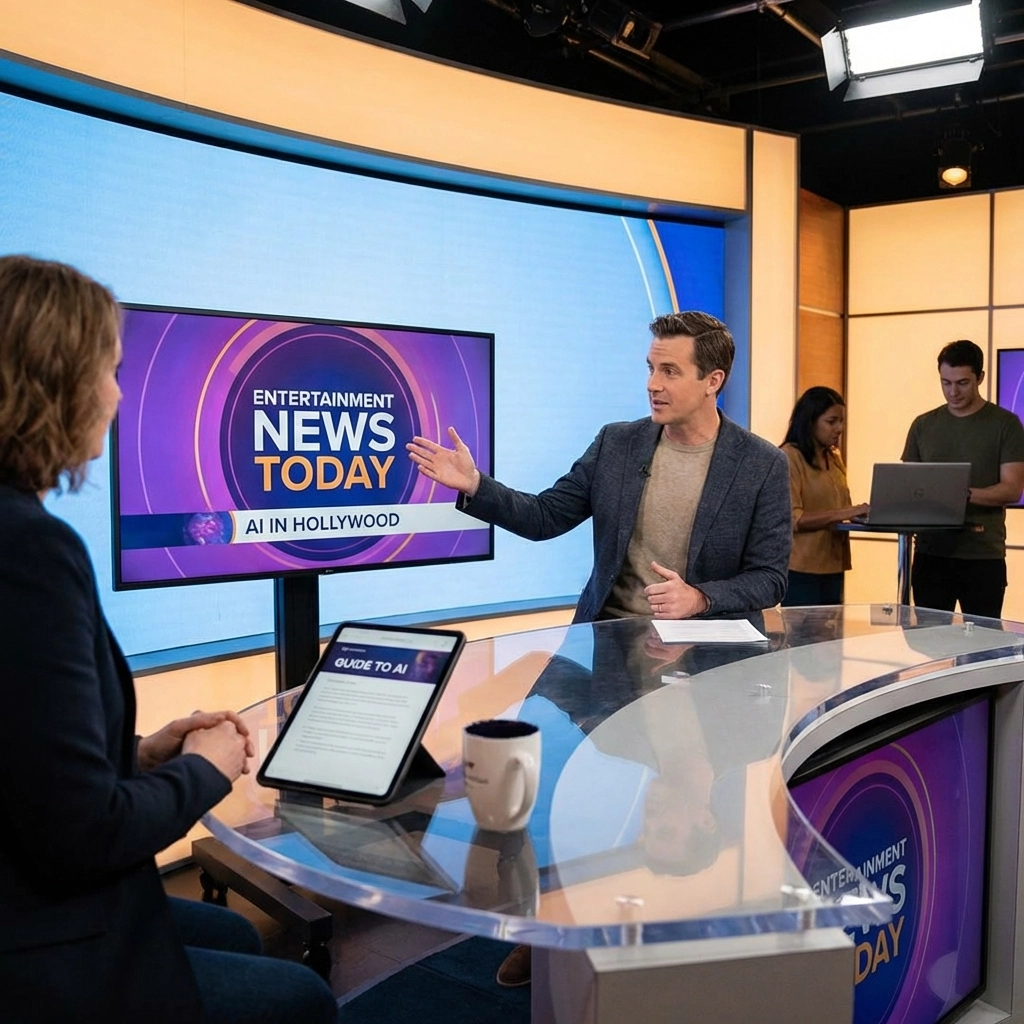
Entertainment News Today 101: A Beginner’s Guide to Mastering AI in Hollywood

 March 21, 2026
If you’ve kept even half an eye on the trades lately, you know that Tinseltown is currently undergoing its biggest facelift since the invention of the "talkie." It’s March 2026, and the conversation in Hollywood has shifted from “Will AI be used?” to “How are we not using more of it?”
For the average moviegoer or the aspiring filmmaker, the rapid integration of Artificial Intelligence into the entertainment world can feel like a fever dream. One day you’re watching a de-aged Harrison Ford, and the next, you’re hearing rumors about entire films being prompted into existence by a guy in a garage.
Welcome to Entertainment News Today 101. If you’ve been feeling a bit lost in the digital sauce, this is your ultimate beginner’s guide to mastering the AI revolution in Hollywood. Grab your popcorn; the future is already playing in a theater near you.
The Scripting Revolution: AI as the Ultimate Co-Writer
The 2023 strikes felt like a lifetime ago, didn't they? Back then, the fear was that AI would replace the writer's room entirely. In 2026, the reality is much more collaborative. Writers aren't being replaced; they’re being "augmented."
Today’s top screenwriters use AI to handle the heavy lifting of world-building. Imagine you’re writing a sci-fi epic. Instead of spending weeks researching the physics of a black hole or the linguistics of a fictional alien race, AI tools can generate these frameworks in seconds. This allows human writers to focus on what they do best: emotion, subtext, and that "soul" that a machine simply can’t replicate.
Major studios are now using proprietary AI models to analyze decades of successful scripts. These tools don't write the movie for you, but they can flag pacing issues or suggest when a plot twist feels too predictable. It’s like having a script doctor who has read every movie ever made and never sleeps.
Visual Effects: The Death of the Uncanny Valley
Remember when de-aged characters looked like slightly melted wax figures? Those days are officially over. In 2026, AI-driven visual effects have reached a point where the "uncanny valley", that creepy feeling you get when something looks almost human but not quite, is a thing of the past.
AI is now used for "Neural Rendering." Instead of manually animating every pore and hair on an actor's face, VFX artists use AI to "teach" the computer how an actor’s skin reacts to light. This has made de-aging and digital resurrection (with proper legal consent, of course) look indistinguishable from reality.
Beyond just faces, AI is revolutionizing background work. We’ve moved past the "Volume" technology used in The Mandalorian. Now, AI can generate photorealistic, interactive environments on the fly. If a director decides mid-scene that the sunset should look a bit more "Martian," the AI adjusts the entire lighting and environment in real-time. It’s cut down production costs and allowed indie filmmakers to achieve "Blockbuster" visuals on a shoe-string budget.
The Rise of the Digital Twin
This is where things get really interesting, and a little controversial. In 2026, many of your favorite stars have "Digital Twins." These are high-fidelity, AI-powered digital versions of themselves that they own and license out.
Why does this matter? Well, an actor can now "star" in a perfume commercial in Tokyo, a voice-over for a video game in London, and a feature film in Los Angeles all at the same time. These digital assets are protected by the new "Right of Likeness" laws that were hammered out over the last couple of years.
For a deeper dive into how this tech started, check out our AI in Hollywood 101 guide. It explains the early days of this transition and how we got to where we are today.
Sound and Music: The AI Symphony
It’s not just about what you see; it’s about what you hear. AI in Hollywood has completely transformed post-production audio. ADR (Automated Dialogue Replacement), which used to be a tedious process of actors re-recording lines in a booth, is now often handled by AI voice cloning. If a line needs to be changed in post-production, the director can simply type the new dialogue, and the AI generates it in the actor’s exact voice, with the correct emotional inflection.
Furthermore, film scoring has become a hybrid art form. Composers are using AI to generate variations of themes. A composer might write a haunting piano melody, and the AI can instantly provide an orchestral version, a synth-wave version, or a choral version. This speed allows for more experimentation and has led to some of the most unique soundtracks we’ve heard in years.
Why It Matters: The Democratization of Storytelling
So, why should you care? Beyond the "cool" factor, AI is leveling the playing field. For the longest time, Hollywood was a walled garden. If you didn’t have $200 million, you couldn’t make a movie that looked like a Marvel film.
In 2026, that wall is crumbling. AI tools are becoming accessible to everyone. A kid with a great story and a powerful laptop can now produce visuals that rival major studios. We are entering an era of "Hyper-Niche" entertainment. Soon, you might be able to watch a movie that was generated specifically for your tastes, featuring your favorite genres and tropes, all powered by AI.
This shift means more diversity in storytelling. When the cost of production drops, studios are more willing to take risks on weird, experimental, or culturally specific stories that they previously would have deemed "too risky" for a big budget.
The Ethical Minefield: Keeping It Human
We can't talk about AI in Hollywood without talking about the elephant in the room: ethics. The industry is still navigating the murky waters of intellectual property. Who owns a script if an AI helped write 30% of it? What happens when an actor passes away: who controls their digital twin?
The industry has landed on a "Human-First" approach, largely thanks to the ironclad contracts established by guilds like SAG-AFTRA and the WGA. However, the battle against "Deepfakes" remains a daily struggle for the entertainment news cycle. Distinguishing between a studio-sanctioned digital performance and a malicious AI-generated fake is the new full-time job for entertainment journalists.
Tips for Mastering the AI Entertainment Landscape
If you want to stay ahead of the curve in 2026, here is how you should approach the news:
- Follow the Tech, Not Just the Talent: Keep an eye on companies like OpenAI, Adobe, and specialized film-tech startups. They are the new "studios" in many ways.
- Look for the "Human Element": As AI becomes more prevalent, the value of raw, unedited human performance is skyrocketing. Live theater and "no-CGI" films are seeing a massive resurgence.
- Stay Skeptical: With AI-generated trailers and "leaked" footage becoming easier to fake, always verify your sources. Clout News is here to help you filter the signal from the noise.
The Bottom Line
The "AI in Hollywood" story isn't about machines taking over; it’s about humans getting a new set of incredibly powerful brushes to paint with. The movies are getting bigger, the stories are getting more personal, and the way we consume entertainment is changing forever.
Whether you're a fan of the blockbusters or the indie darlings, understanding these tools is the only way to truly appreciate the craftsmanship of the modern era. Hollywood has always been a dream factory; AI is just the latest upgrade to the assembly line.
Keep following Clout News for the latest updates on how technology is reshaping your favorite industries. From the latest in crypto trends to the cutting edge of cinema, we’ve got you covered.

Recent Posts
- The Ultimate Guide to Central Bank Digital Currencies: Everything You Need to Succeed Globally
- Global stock markets rally following positive employment data and cooling inflation figures in April
- London Tokyo Paris and New York Reveal Shared Global Entertainment Industry Growth Strategies
- Daily Global News Updates: Entertainment, Tech, Crypto, and More
- Apple Intelligence Sets New Global Privacy Standards for Artificial Intelligence Software Rollouts
- Top 10 Latest World News Headlines Affecting International Trade And Global Business Markets Today
- Major streaming services launch AI search tools and 4K sports to enhance viewer engagement
- Global travel restrictions tighten as nations update entry requirements for international passengers in 2026
- Daily Global News Updates: Entertainment, Tech, Crypto, and More
- Entertainment News Today: The Ultimate Guide to Everything You Need to Know About Cinema