
 Business
Is Traditional Cable TV Dead? Do People Still Watch Live Sports on TV?

 March 19, 2026
For over a decade, tech gurus and industry analysts have been ringing the death knell for traditional cable TV. We’ve heard it all before: "Streaming is the future," "Cord-cutting is an epidemic," and "The cable box is a relic of the past." But as we move through March 2026, the reality is a bit more complicated than a simple obituary.
Is cable TV dead? If you look at the empty aisles of the "DVD and Blu-ray" sections in stores, you might think so. But if you look at the millions of households still paying a monthly bill to Comcast or Spectrum, the answer is a resounding "not quite." However, it is definitely on life support, and the only thing keeping the heart beating is a very specific type of content: live events.
The Numbers Don't Lie: A Slow Motion Decline
Let’s look at the cold, hard data. Back in 2010, cable TV was the undisputed king of the living room, with roughly 105 million U.S. households subscribed to a pay-TV service. Fast forward to today, and that number has plummeted to approximately 66.1 million. That is a staggering 34% drop in just over a decade.
Even more telling is the share of our actual "eyeball time." As of July 2025, streaming services captured a massive 47.3% of total television viewing. Meanwhile, cable has shrunk to just 22.2%. If this were a race, streaming is currently lapping cable on the final turn. By the end of this year, it’s estimated that over 80 million U.S. households will be "non-pay TV" users, meaning the majority of Americans are now officially cord-cutters or "cord-nevers", people who have never signed a cable contract in their lives.
The Death of the "Cable Original"
One of the biggest signs that cable is losing its grip is the disappearance of original scripted content. Remember the "Golden Age of TV"? Shows like Mad Men, Breaking Bad, and The Walking Dead made cable networks like AMC and FX must-watch destinations. At its peak, cable networks were pumping out 186 original scripted series a year.
Today, that number has dwindled to nearly zero. Most networks have realized they can’t compete with the billion-dollar production budgets of Netflix, Disney+, or Apple TV+. Instead of producing high-end dramas, cable channels have pivoted to "unscripted" content, think reality TV, true crime documentaries, and endless reruns of Law & Order. While this keeps the lights on, it doesn't give viewers a reason to stay when they can get higher-quality storytelling on a streaming app for a fraction of the price.
Live Sports: The Last Great Hope
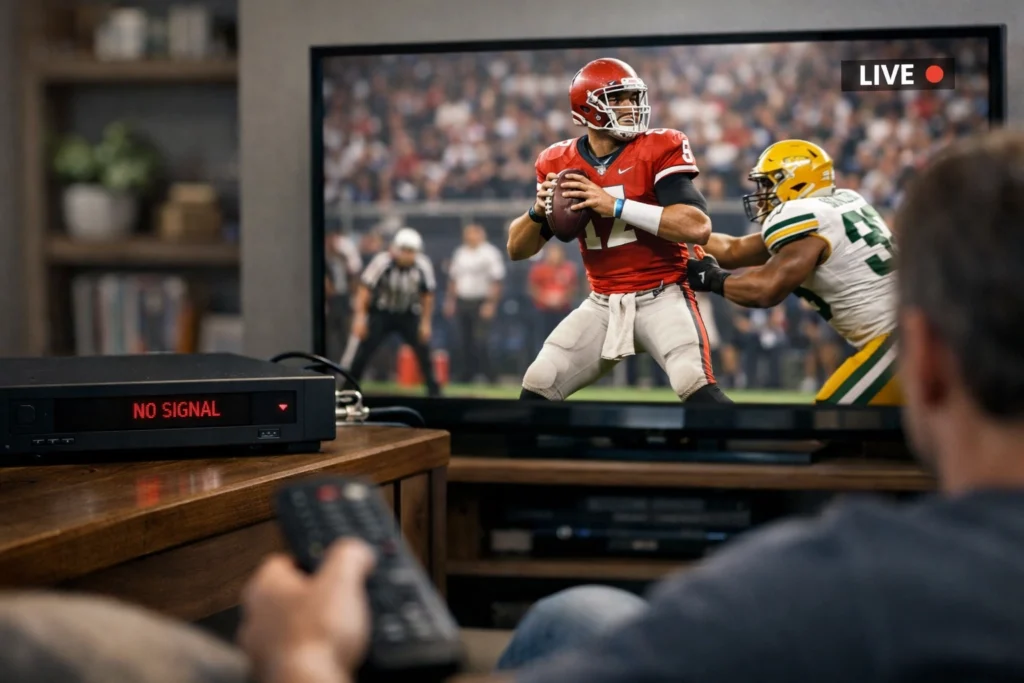
So, why are 66 million people still paying for cable? The answer can be summed up in two words: Live Sports.
Live sports remain the ultimate "appointment viewing." While you can wait a week to watch the latest episode of a sitcom, you can't wait a week to watch the Super Bowl or the NBA Finals. If you don't see it live, the internet will spoil it for you within seconds.
Research shows that nearly 69% of the top-performing content on cable TV is sports-related. For many fans, the friction of trying to find which streaming service has the rights to their local team is too much of a headache. Cable offers a "one-stop shop" where you can flip from ESPN to TNT to your local sports network without switching apps or dealing with 30-second buffering delays.
The connection between sports and modern media is only getting stronger. We’re seeing massive influencers and brands step into this space to bridge the gap between traditional viewing and the digital age. For instance, the way Logan Paul and KSI announced Prime as a new sponsor for FC Barcelona shows how the world of sports is evolving to capture younger audiences who might not even own a TV.
The "Streaming Fatigue" Paradox
While cable is declining, the "streaming revolution" isn't exactly a fairytale for consumers either. In the early days, you could cancel a $150 cable bill and get everything you wanted for $10 on Netflix.
In 2026, the landscape is fragmented. To get the same variety of content, you now need Netflix, Disney+, Max, Hulu, Peacock, Paramount+, and Amazon Prime. Once you add up all those monthly subscriptions, you’re often back to spending $120 or more. This has led to a phenomenon known as "streaming fatigue," where viewers are overwhelmed by the number of apps they have to manage.
This fatigue is actually helping cable stay alive. Cable companies have started offering "hybrid bundles," where your cable subscription includes access to various streaming apps. For a certain demographic, having one bill and one remote is worth the extra cost.
Why It Matters
The shift from cable to streaming isn't just about how we watch TV; it’s about how culture is shaped.
- The Death of the "Water Cooler Moment": When everyone watched the same cable shows at the same time, we had a shared cultural language. Today, everyone is watching something different at a different time.
- Advertising Evolution: Advertisers are moving their budgets away from 30-second cable spots and toward targeted digital ads. This changes how products are marketed to us.
- The Power of Live Events: As scripted TV moves to streaming, live events (sports, awards shows, and breaking news) become even more valuable. They are the only times a mass audience is gathered in one "place" simultaneously.
- Economic Impact: The decline of cable means less money for traditional networks, leading to more layoffs and fewer risks being taken on new types of programming.
Is the End Near?
If we define "dead" as "completely non-existent," then no, cable TV isn't dead yet. It has transitioned from a dominant cultural force into a niche service. It’s now the "landline phone" of entertainment: something that persists because of older demographics, rural internet limitations, and the specific needs of sports fanatics.
However, the trend is irreversible. As streaming services continue to bid for exclusive sports rights (like Amazon’s Thursday Night Football or YouTube’s NFL Sunday Ticket), the last reason to keep cable is slowly being chipped away.
Final Thoughts
For the average viewer in 2026, the choice isn't between cable and streaming; it’s about convenience. We want our content when we want it, where we want it, and without a two-year contract. Cable companies are trying to adapt by becoming internet service providers first and television providers second, but the "glory days" of the cable box are officially over.
Whether you're watching the latest boxing comeback news on your phone or catching a live game on a 75-inch screen, the way we consume media has changed forever. Cable might still be hanging on by a thread, but that thread is looking thinner every single day.
For more updates on the intersection of tech, business, and entertainment, stay tuned to Clout News. We’ll keep you posted on whether the cable cord finally snaps or if it finds a way to reinvent itself for the next generation.

Recent Posts
- 7 Mistakes You’re Making with Digital Assets Based on the Latest Crypto News Reports
- The Ultimate Guide to Central Bank Digital Currencies: Everything You Need to Succeed Globally
- Global stock markets rally following positive employment data and cooling inflation figures in April
- London Tokyo Paris and New York Reveal Shared Global Entertainment Industry Growth Strategies
- Daily Global News Updates: Entertainment, Tech, Crypto, and More
- Apple Intelligence Sets New Global Privacy Standards for Artificial Intelligence Software Rollouts
- Top 10 Latest World News Headlines Affecting International Trade And Global Business Markets Today
- Major streaming services launch AI search tools and 4K sports to enhance viewer engagement
- Global travel restrictions tighten as nations update entry requirements for international passengers in 2026
- Daily Global News Updates: Entertainment, Tech, Crypto, and More